
About
Teams > Louvain members
Current members
Fabio Maltoni (Team Leader)
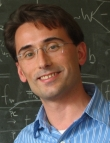
Fabio Maltoni is member of the Centre for Cosmology, Particle Physics and Phenomenology (CP3) in Louvain since 2005. His research has mainly focused on Higgs boson production and decay in models with extended Higgs sectors, production and decay of quarkonia, properties and structure of QCD amplitudes, and top-quark phenomenology. Over the past decade Fabio Maltoni has devoted most of his attention to the computer simulation of collider physics and the automated computation of scattering amplitudes. He is one of the authors of MadGraph 5 that provides a platform where pheno projects can be developed, including SM and BSM physics, LO and NLO accurate predictions, such as aMC@NLO.
Chiara Arina
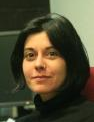
Chiara research activities relate to the dark matter problem within a particle physics perspective. Her theoretical work focuses on dark matter model building in connection with the problem of generation of neutrino masses and/or of the visible matter. Her phenomenological research focuses on various aspects of dark matter detection (direct, indirect and at collider), with a particular attention to the statistical approach.
Celine Degrande
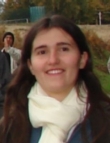
Celine is working on Effective Field Theory (EFT) at colliders mainly in top and electroweak sector. Recently, she has been focusing on the interplay between PDF and EFT fits and on the computation of NLO QCD corrections for the SMEFT. She is the author of NLOCT and one of the FeynRules authors. She is also investigating how the photon polarisation in cosmic rays can be used to probe BSM physics.
Olivier Mattelaer (Node Leader)

Olivier Mattelaer is research scientist in Louvain since 2009. He is the main developer of the MadGraph5_aMC@NLO framework.
Theo Heimel

Theo Heimel is a Post-Doc. The main focus of his research is accelerating event generation for the High-Luminosity LHC and beyond using generative networks. In particular, the MadNIS project aims to make sampling hard-scattering events in MadGraph faster using neural importance sampling. Furthermore, he is interested in ML-based methods to extract more information from LHC data. This includes unfolding with generative networks, simulation-based inference, and combining machine-learned detector effects with theory knowledge in the matrix element method.
Luca Beccatini

Luca Beccatini is doing a joint PhD between UCLouvain and the University of Bologna. He is working on neural network surrogate models to approximate scattering amplitudes and High-Energy Physics event generation, such as event unweighting.